
Kingston to Waterloo takes 30 minutes and an annual season costs £2,512. Times, zones and fares for all ten borough stations, and when contactless is cheaper.
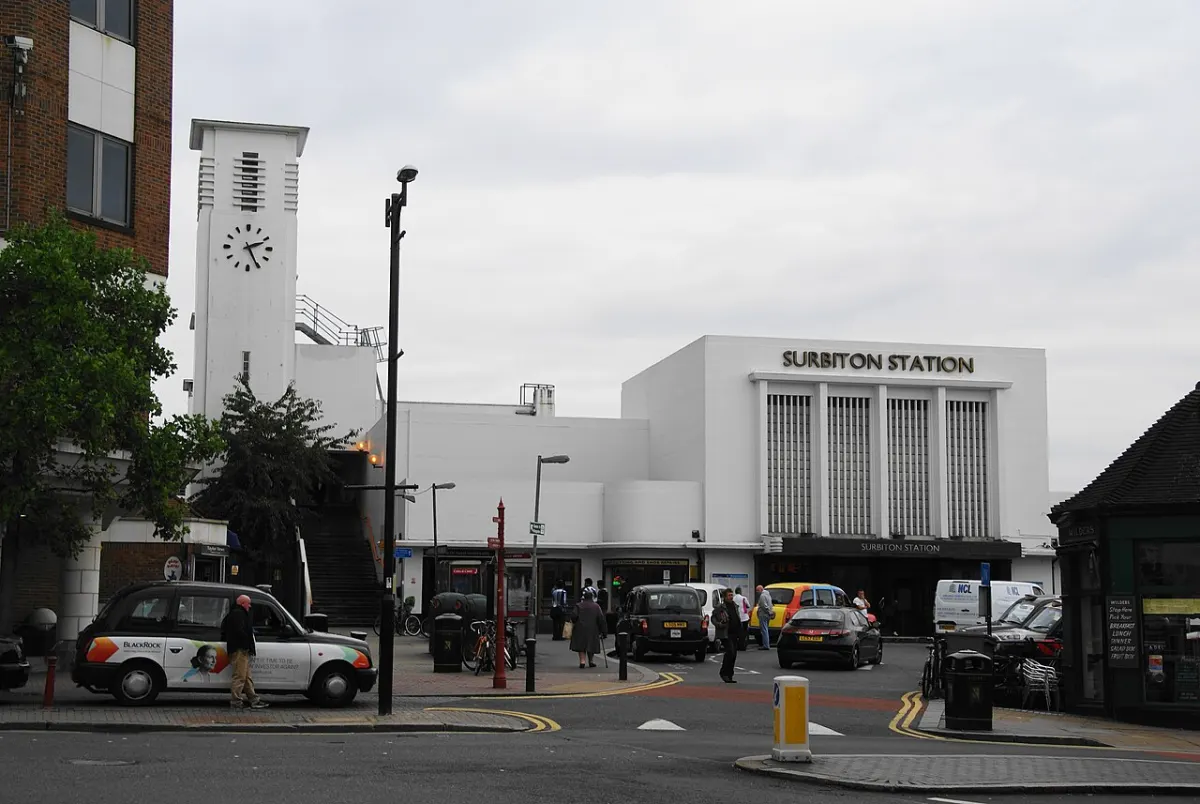
Ten National Rail stations sit inside the Royal Borough of Kingston upon Thames, all of them run by South Western Railway, all of them going to the same place: London Waterloo. What differs is how long it takes and what it costs, and the difference between the best and worst of them is larger than most people expect. Surbiton reaches Waterloo in 17 minutes. Chessington South takes 39.
Every time and fare on this page was read off the live National Rail timetable and the Transport for London fares tables in August 2026. Check the operator before you travel, because engineering work changes weekend patterns.
Updated 30 September: Berrylands station reopened on 28 September. Its row now shows direct train times of 29 minutes at peak and 28 off-peak. The August figures of 46 and 41 minutes were measured while the station was closed and included the replacement bus.
How long each station takes
These are the fastest journeys observed on a normal Monday, plus the typical off-peak best. All are direct to Waterloo.
| Station | Zone | Fastest peak | Fastest off-peak |
|---|---|---|---|
| Surbiton | 6 | 17 min | 20 min |
| New Malden | 4 | 25 min | 24 min |
| Berrylands | 5 | 29 min | 28 min |
| Norbiton | 5 | 31 min | 28 min |
| Kingston | 6 | 33 min | 30 min |
| Tolworth | 5 | 34 min | 31 min |
| Chessington South | 6 | 39 min | 36 min |
Three route patterns explain the whole table.
Surbiton is on the main line, and the fast Portsmouth and Woking services call there without stopping again until Waterloo. That is why a zone 6 station beats a zone 4 one by seven minutes. It is the single biggest reason Surbiton commands the prices it does.
Kingston and Norbiton are on the Kingston loop, which runs Waterloo to Wimbledon, round through Kingston and Richmond, and back to Waterloo. Direction matters more than distance here: some Kingston departures reach Waterloo in 30 minutes and others, going the long way round via Richmond, take 50. The 08:03 from Kingston arrives at 08:37; the 08:28 arrives at 09:18. Check the board, not the clock.
Tolworth and the two Chessington stations are on the Chessington branch, a half-hourly single-track spur off Motspur Park. Trains leave Chessington South at 04 and 34 past the hour, and there is no faster option, so a missed train costs a full 30 minutes. The first train of the day is the 06:34, which is late enough to rule the branch out for early shifts.
Berrylands is on the Hampton Court line, with a train to Waterloo every 30 minutes, at 03 and 33 or 34 past the hour. It reopened on 28 September 2026 after a rebuild, and our story on the reopening has the detail. Its figures above are from the 1 October timetable.
First and last trains
- Kingston: first 05:03, last 23:49 (arriving 00:26).
- Surbiton: first 04:56, last 00:26 (arriving 00:50). The only borough station with a train after midnight.
- New Malden: first 05:09.
- Chessington South: first 06:34, last 23:42 (arriving 00:26).
What it costs
Kingston’s stations sit in TfL zones 4, 5 and 6, so contactless and Oyster work the whole way and season tickets compete with Travelcards. That makes the pricing more forgiving than a commuter town outside the zones, and it also means the cheapest option is not always the obvious one.
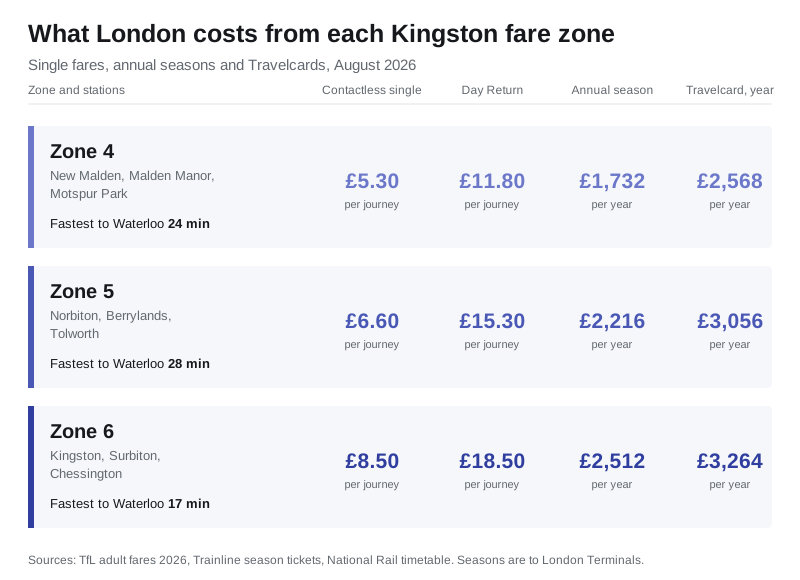
| Fare zone | Stations | Contactless single (anytime) | Anytime Day Single | Anytime Day Return |
|---|---|---|---|---|
| Zone 4 | New Malden, Malden Manor, Motspur Park | £5.30 | £7.00 | £11.80 |
| Zone 5 | Norbiton, Berrylands, Tolworth | £6.60 | £8.50 | £15.30 |
| Zone 6 | Kingston, Surbiton, Chessington North, Chessington South | £8.50 | £9.40 | £18.50 |
When contactless beats a paper ticket, and when it does not
This is the part that is worth two minutes of your time, because it goes both ways.
From Kingston or Surbiton (zone 6): tap in and out and a return day trip costs two singles at £8.50, or £17.00, which the zones 1 to 6 daily cap of £16.30 then trims. The Anytime Day Return from the ticket machine is £18.50. Contactless is £2.20 cheaper, and it also covers any tube or bus you use once you are there, up to the same cap.
From New Malden (zone 4): the sums reverse. Two contactless singles are £10.60 against a £12.80 daily cap, but the Anytime Day Return is £11.80. If you are making one trip in and out and nothing else, the paper return is the cheaper ticket. Add a single tube journey at the far end and contactless wins again.
From Norbiton, Berrylands or Tolworth (zone 5): the £15.30 Anytime Day Return and the £15.30 zones 1 to 5 daily cap are identical, so it makes no difference to the price. Take the contactless for the flexibility.
Seasons and Travelcards
For a five-day commute the choice is between a rail-only season to London Terminals and a Travelcard that also covers the tube and buses.
| Ticket | Weekly | Monthly | Annual |
|---|---|---|---|
| Kingston or Surbiton to London Terminals | £62.80 | £241.20 | £2,512 |
| Zones 1 to 6 Travelcard | £81.60 | £313.40 | £3,264 |
| Norbiton, Berrylands or Tolworth to London Terminals | £55.40 | £212.80 | £2,216 |
| Zones 1 to 5 Travelcard | £76.40 | £293.40 | £3,056 |
| New Malden to London Terminals | £43.30 | £166.30 | £1,732 |
| Zones 1 to 4 Travelcard | £64.20 | £246.60 | £2,568 |
The gap from Kingston is £752 a year. That is what the tube, the buses and the run of every zone costs you on top of the train. If your office is a walk from Waterloo, the rail-only season is the better buy; if you change onto the Underground twice a day, the Travelcard pays for itself before spring.
Two Kingston quirks are worth knowing. A season from Kingston that is also valid to or from Surbiton costs £2,548 a year, £36 more than either on its own, which is close to free optionality if you sometimes want the fast line. And a ticket marked “not valid for travel on London Underground service” is £2,516, four pounds more than the any-permitted-route version at £2,512, so there is no reason to buy the restricted one.
At the station
Kingston station has a ticket office open 06:40 to 20:30 Monday to Saturday and 08:30 to 18:00 on Sunday. It has step-free access to all platforms with lifts, and it has no car park at all, which catches people out. Cycle storage and cycle hire are available. If you need to drive and park, the council’s Canbury Place car park is a short walk away at £2.70 an hour, capped at £16.00 for a day over six hours.
Full facilities for every borough station are on the National Rail station pages.
South Western Railway has been in public ownership since 25 May 2025, run by DfT Operator ahead of the move to Great British Railways. Tickets, fares and timetables were unaffected by the transfer.
Roadworks and closures around the stations, including the long-running cable works on Ewell Road, are on our Kingston roadworks and travel page.
Frequently asked questions
How long does it take to get from Kingston to London?
30 to 33 minutes to Waterloo on a direct train, but only if you catch one going the short way via Wimbledon. Kingston loop services routed via Richmond take up to 50 minutes for the same journey.
Which Kingston station is fastest to London?
Surbiton, at 17 minutes to Waterloo in the morning peak. It is on the main line, so fast services call there and then run non-stop to the terminus.
How much is a season ticket from Kingston to London?
£2,512 a year, £241.20 a month or £62.80 a week to London Terminals. A zones 1 to 6 annual Travelcard, which adds the tube and buses, is £3,264.
Can I use contactless or Oyster from Kingston?
Yes. Every station in the borough is inside the TfL zones, so contactless and Oyster work and daily and weekly caps apply. From zone 6 a contactless day trip works out £2.20 cheaper than an Anytime Day Return.
What zone is Kingston station in?
Zone 6, along with Surbiton, Chessington North and Chessington South. Norbiton, Berrylands and Tolworth are zone 5; New Malden, Malden Manor and Motspur Park are zone 4.
What time is the first train from Kingston to Waterloo?
05:03, arriving 05:34. The last is the 23:49, arriving 00:26. Surbiton runs later, with a 00:26 departure arriving at 00:50.
Sources
- traintimes.org.uk, a National Rail Enquiries front end, for journey times, first and last trains and walk-up fares from each station, read for the 17 August 2026 timetable.
- Transport for London adult fares 2026 for daily and weekly caps and Travelcard prices.
- TfL StopPoint API for the fare zone of each station.
- Trainline season tickets for weekly, monthly and annual season prices and route restrictions.
- National Rail station information, Kingston for ticket office hours, step-free access and parking.
- GOV.UK, South Western Railway transferred to public ownership for the operator’s status.
Fares and timetables change. Confirm with South Western Railway or National Rail before you travel, particularly at weekends.
Have your say